
Duval County Arrest Feed Paths
Booking in Duval starts with custody, not paperwork. The Jacksonville Sheriff's Office Department of Corrections builds the county booking record when a person enters custody. The John E. Goode Pretrial Detention Facility is the main intake point. Two other sites matter as well. JSO keeps sentenced or transitional groups at Montgomery Correctional Center and the Community Transition Center. The arresting officer may come from JSO, a beach agency, or another authority. Either way, JSO DOC creates or receives the jail record, and the Duval Clerk's court file carries the case outcome.
Duval offers one date-based transaction route. There is no public weekly arrest blotter. The In-Sheet comes closest to a same-day report. A name and number roster covers both current and historical entries. The "EOS 30 Days" option sounds time-based, but it tracks end-of-sentence and release information, not arrests from the last 30 days. Keeping those labels straight stops a release list from being read as a booking feed.
| Official view | Actual scope | Photo and next step |
|---|---|---|
| In-Sheet / Public Reports | Date-driven people booked into or released from a facility | Use the detail record for a photo where released |
| Inmate Information Search | Current and historical incarcerated or released records | Search by name, booking number, or JSO ID |
| EOS 30 Days | End-of-sentence and release-oriented report | Do not treat it as a 30-day arrest log |
| JSO Public Records | Named person, date, or date-range records | Request the report or photograph if a web view is absent |
When Duval Arrests Appear
Arrest time, booking time, and posting time are three separate events. The street moment comes first. Booking follows, once JSO finishes property inventory, medical screening, and cell assignment. A public result appears only after that. JSO promises no hourly refresh, so someone arrested an hour ago may simply not show up yet.
Work the question in order. Start with the date-based In-Sheet. Then try the live name or number search. If both come up empty, call jail information at 904-630-5760 or file a focused public-record request. A blank screen is not proof that no arrest happened.
See the official JSO In-Sheet and Public Reports screen, which lists bookings for a date you choose.
Treat the report as a transaction view. Open an official detail before drawing any conclusion about present custody.
Search Duval County Arrest Records
The official JSO Inmate Information Search reaches far beyond today's jail roster. It holds current and historical information for both incarcerated and released people. Clear the robot-verification step first. Then use the narrowest identifier you have. A bare name proves little. People share names, and one person can have several bookings.
| Search field | Best use |
|---|---|
| Last, first, and middle name | Start with an exact or distinctive name |
| Booking number | Match one jail transaction |
| JSO ID / inmate number | Follow the person's JSO record without confusing it with an FDC number |
| Booking date and agency | Separate similar names and identify who made the arrest |
| Status and facility | Check custody, release, transfer, or historical status |
Search by number whenever you have one. Otherwise enter an exact last name plus a first or middle name. Then compare the booking date, agency, charges, facility, status, and any public photo. Finally, check VINELink for a current custody alert or CORE for the later case. JSO has no booking-photo app. The responsive roster is its phone-friendly route. The official JSO roster landing screen is the entry point.
The verification step can slow you down. A copied third-party result is no substitute for the official detail.
Where Duval Arrests Get Published
Each channel answers a different question. The JSO roster and In-Sheet come straight from the custodian. CORE tracks the case. FDC matters only after a state sentence or supervision begins, while news pages can offer a lead without proving custody or the court result.
| Channel | Photos? | Status | How to use it |
|---|---|---|---|
| JSO inmate detail | May display | Official | Current or historical county booking detail |
| JSO In-Sheet | Detail may display | Official | Date-based booking and release transactions |
| Duval Clerk CORE | Not the booking-photo source | Official | Case filings, hearings, and disposition |
| FDC offender search | May display | Official | State prison or state supervision only |
| News4JAX, Action News Jax, WOKV, Times-Union | Sometimes | Independent news | Selected cases, never a full roster |
| RecentlyBooked, Arrests.org, Mugshots.com | Varies | Unofficial | Stale-prone leads that require official confirmation |
RecentlyBooked's Duval page presents a current-looking county list. Arrests.org's Duval page adds county and agency filters. Mugshots.com keeps an older-looking Duval and Jacksonville archive. Mugshots.zone and Busted Newspaper show no working Duval page, and none of these unofficial sites proves current custody or a court result, so the official record stays primary.
Duval Booking Report Differences
Duval County recent arrests do not sit in one multi-day list. The In-Sheet is date-driven. JSO publishes no 72-hour or weekly booking blotter. The EOS 30 Days report must not be recast as one. For a same-day walkthrough, see Arrests Last 24 Hours. The wider Police Blotter shows how to assemble multiple dates. It also covers requesting a date range when no consolidated blotter exists.
Note: Completed Calls for Dispatched Service lists calls, not bookings, and a dispatched call may end without an arrest.
Duval Custody Alerts on Mobile
JSO offers no dedicated jail app. Its booking roster runs fine in a phone's browser, and that covers most lookups. News posts and social accounts share selected arrests, wanted notices, and safety updates. They are not a full booking list, though. To track one person's custody status, Florida VINE handles alerts. It works by web, phone, text, email, and app. Setup steps come from JSO victim services.
Remember what VINE is. It tracks status and sends alerts, not history. A brand-new booking may take time to appear, and the service never promises a photo. For matching a person, the VINELink Custody Check page walks through it. It covers registering for alerts too.
Duval County Arrests by City
The arresting agency and the jail are not always the same in Duval County. Jacksonville itself runs through the consolidated Sheriff's Office system. Jacksonville Beach and Atlantic Beach keep their own police departments, but anyone held in Duval custody can still appear in the JSO booking system. Check there too.
- Jacksonville Recent Arrests covers JSO as both the main city law-enforcement body and county booking operator.
- Jacksonville Beach Recent Arrests separates city police records from the JSO jail record.
- Atlantic Beach Recent Arrests explains the police records route and county-custody check.
Name two custodians on any report request. That means the arresting agency plus JSO DOC, if the person entered county custody. JSO's own order requires the responsible agency to approve its arrest report before release.
Duval Arrest Statistics Need Context
Atlantic Beach's 2025 annual report lists 507 arrests. It also counts 19 involving force and 30,427 computer-aided dispatch calls. Arrests rose 44.44 percent over 2024, the report states. Those numbers cover one small city agency across a full year. They are not a live Duval County booking count. Do not add them to a roster total. And do not use them to guess what happened in a single case.
Annual reports help with trends because they define a time frame and a reporting body. A current roster answers a different question. It shows who has a JSO record. It also lists what custody status the detail shows right now.
Inside a Duval Arrest Record
A full booking record holds far more than a brief search card. Which fields you see depends on custody status, redactions, exemptions, and the view chosen. Match several identifiers before treating any record as one person's.
| Field | What it shows |
|---|---|
| Name, alias, JSO ID | Identity data used to distinguish records |
| Booking number and time | The jail transaction and when intake created it |
| Arrest time and agency | When custody began and which body made the arrest |
| Charges, statute, degree | Charges entered at booking, not final findings |
| Bond and court reference | Release condition and link to the judicial case |
| Status, release, facility | Current, released, transferred, sentenced, or historical position |
| Booking photograph | An intake image where public and displayed |
Duval County Mugshot Availability
JSO says both current and historical search details can show booking photos and charges. Not every entry carries an image, though. Juvenile confidentiality can limit the display. So can an open investigation, protected victim data, redaction rules, or an interface change.
An unofficial Duval page claims the county provides no images, which contradicts JSO's own description. Trust the official source. A third-party photo gap may stem from a stale collection. It may be an older image or a failed match. When a public detail is missing a needed image, give JSO the booking number and the date. Include the agency and record type in the request. Someone serving a state sentence may instead have an FDC offender photo. That is a separate state record entirely.
Duval Booking Record Request Costs
Each custodian charges differently. JSO prices paper copies at $0.15 per single-sided page and $0.20 per double-sided one. A certified copy costs $1. Research, review, duplication, and redaction can trigger an estimate that needs approval first. Jacksonville Beach lists $1 for a photograph plus separate report charges. Atlantic Beach follows its own Chapter 119 schedule. It may ask for a deposit on extensive research.
Costs matter most when a beach agency made the arrest but JSO held the person. Request the report from the arresting department. Request the booking record or photo from JSO. Never assume one payment or one request reaches both custodians.
Request a Duval Arrest Record
Some records need a formal request. Use JSO's Public Records page and GovQA when a record is missing from the roster or spans several dates. The Public Records Unit also takes requests at 904-630-2209 or at 501 E. Bay Street, Jacksonville, FL 32202. The portal suits anything beyond a quick counter request.
- Give the full name, booking number or JSO ID, and arrest or booking date.
- Name the arresting agency and the exact item, such as the booking report, photograph, or date-range release list.
- Ask for all segregable non-exempt portions if redaction is needed.
- Keep the request number and approve any estimate before processing.
- Ask the custodian to cite the statute for any withheld part.
Chapter 119 demands prompt acknowledgement and a good-faith response. It sets no single deadline for every complex request, though. JSO lists weekday phone hours from 8:00 a.m. to 4:30 p.m. A current relocation notice may affect service. Check the official JSO Public Records page for channels and service notices before visiting.
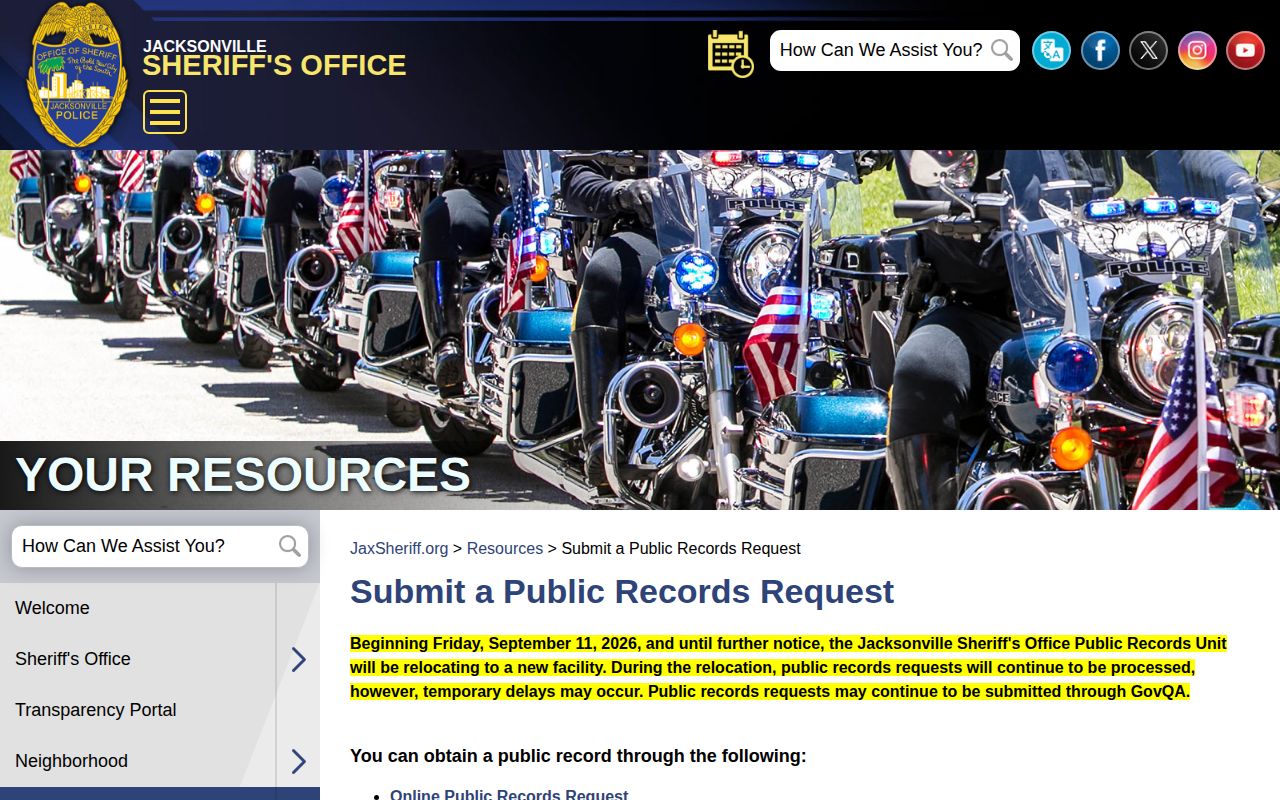
A precise request routes faster and avoids a needless research estimate.
Florida Law on Duval Mugshots
Florida's Chapter 119 generally allows inspection and copying. It sets a reasonable time and reasonable conditions. Section 119.07 requires prompt acknowledgement and good faith. Section 119.071 shields defined material. That includes active criminal intelligence, some investigative files, victim data, confidential sources, and protected personal information. When possible, the custodian releases the public portion after redacting exempt parts.
Such a request never erases the official arrest record or settles the case. Fix a bad source record with its custodian first. For sealing or expungement, FDLE calls the Certificate of Eligibility application the first step. A complete packet typically takes 12 weeks. The certificate alone grants nothing. A court order is required. FDLE also warns that automatic state sealing leaves local records open. The Florida public-record access statute lays out the inspection, copying, response, and exemption-citation rules.
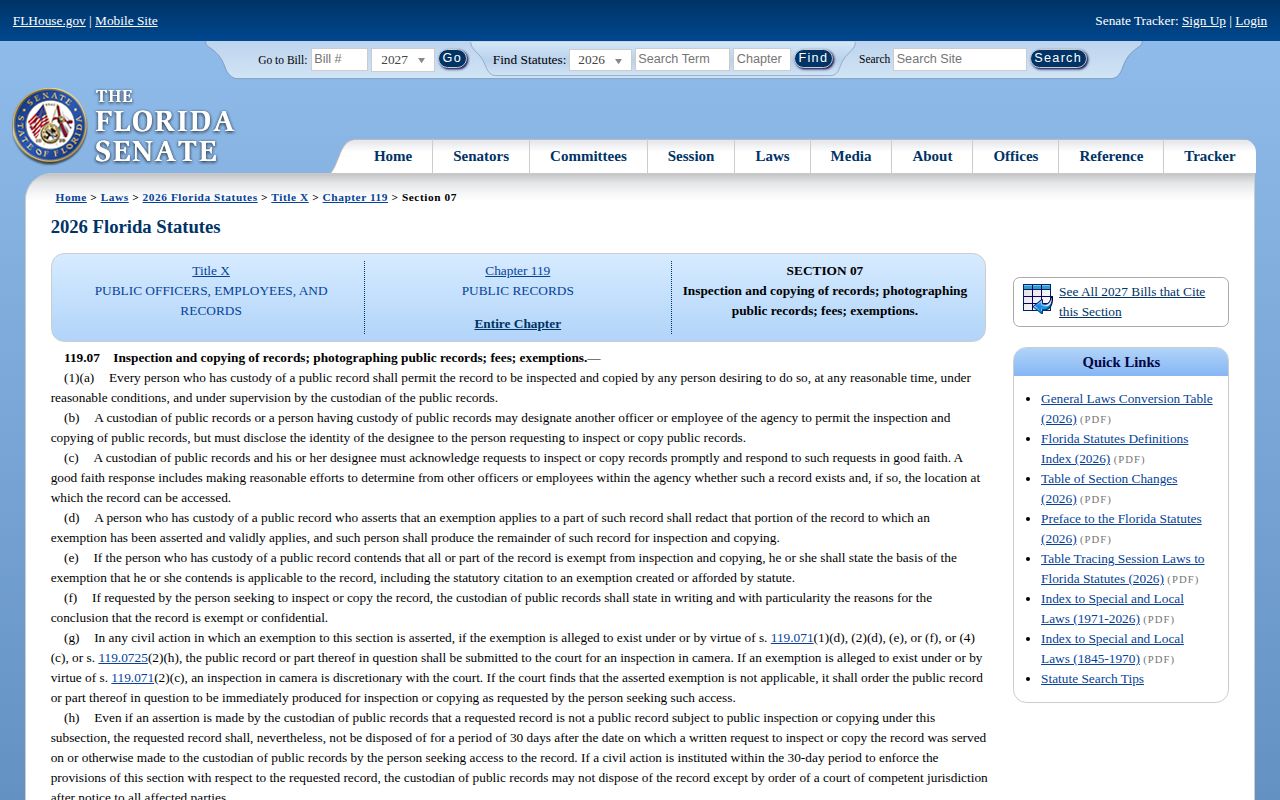
The statute opens the rule; other Florida laws finish it with exemptions and withholdings of their own.
Juvenile Duval Arrest Record Limits
Juvenile files sit behind a wall in Florida. Statute §985.04 keeps juvenile proceeding information confidential, though a few exceptions apply. Conduct that would count as a felony for an adult can slip out. Certain transfers to adult court can slip out too. That is why a child can be missing from a Duval booking view. The arrest definitely happened, but the name stays hidden.
A copied image floating on some unofficial page proves nothing. It does not establish that republication is allowed or that the record stayed public. Confirm the legal basis first. If protected information is involved, leave it out. The proper path is the court or agency process open to an authorized person. Do not go hunting for a copy elsewhere.
Duval Records After Web Removal
A missing web page is not a missing record. Florida's GS2 schedule sets the retention floor. Duval booking records, commitment and release lists, and inmate incarceration records must survive. The floor is one anniversary year after release. That is the minimum. Arrest offender information can stay even longer. The schedule keeps it until it is obsolete, superseded, or has lost administrative value. None of it requires a web result to stay up.
So when an old Duval County arrest entry vanishes, request it from JSO. Ask whether the record is off site or in an archived series. Search engines do offer an outdated-content process for removed pages. It refreshes a listing but never deletes the source record. RecentlyBooked and Mugshots.com describe free documentation-based maintenance paths. Those voluntary policies never replace §901.43, agency correction, or a court order. Anyone demanding payment to remove a booking image deserves suspicion.
Duval Warrants and Wanted Notices
JSO's official Wanted page is built for tips and public safety. The Wanted page is not a county warrant archive. Never approach someone on the list. Instead, call 904-630-0500 with what you know. Use 911 for emergencies, or First Coast Crime Stoppers at 1-866-845-TIPS for an anonymous tip with a possible reward. The email tip address is not monitored around the clock.
Checking for a warrant works differently. Officers query NCIC, FCIC, and eWarrants internally, but none of those systems is open to the public. CORE may show a warrant, capias, or failure-to-appear event. A clean-looking docket does not prove that no warrant or related order exists. Anyone who suspects a Duval County warrant should talk with the court or legal counsel.
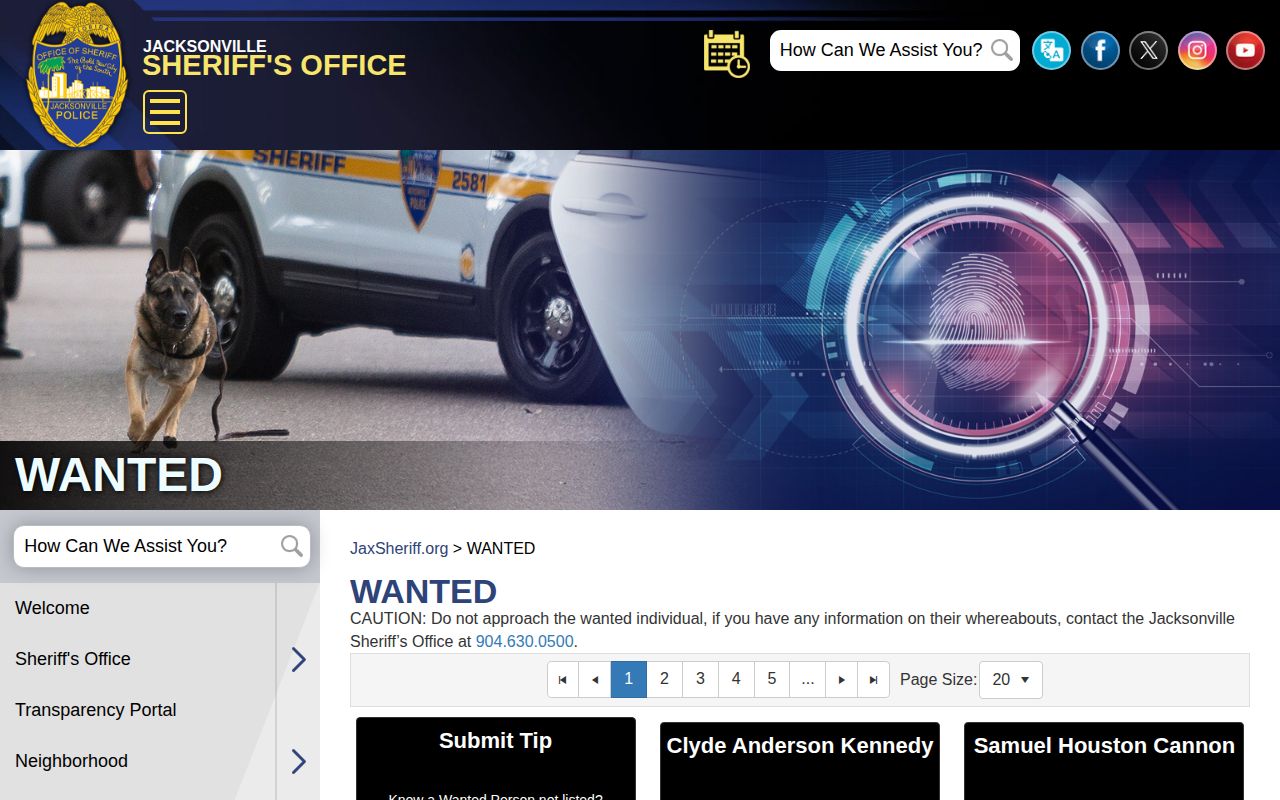
Wanted listings reflect what is active on display at any given moment rather than a complete historical record.
Duval Bond and Release Mechanics
First appearance comes within 24 hours of an arrest in Duval County. Sessions run at 9:00 a.m. and 1:00 p.m. Both are held at the pretrial detention facility. There, a person may get a court date, stay held, or become eligible for release. Full cash bond goes to jail reception. Surety bond runs through a bonding agency. Purge payments go to the courthouse, or to the jail after hours. Release processing starts after clearance, and timing varies. "Released" on the roster means only that JSO custody ended, and a bond entry says nothing about the case outcome.
Duval Arrests Reach First Appearance
Four words dominate a first appearance in Duval County. Booking means jail intake, and bond is a condition of release. Arraignment is when the court formally addresses the charges. Disposition is simply how the case ends up resolved.
The Duval Clerk CORE file tracks what happens after an arrest. Filings, hearings, pleas, dismissals, adjudications, and sentences all live there. That is context a booking page never carries.
Duval Clerk E-Notify is a different tool. This free service sends reminders before scheduled hearings. The Clerk cautions, though, that a reminder is not an official notice, and a new or reopened case may lag before it appears in the system.
Custody Beyond Duval County
Custody searches reach well past Duval County. The Florida Department of Corrections offender search lists felony offenders. They are sentenced to state prison or placed under state supervision. County jail sentences and local supervision are outside it. Look up a name or a six-character DC number, then confirm the detail page. An FDC photo comes from state corrections. It may not match the JSO booking photograph. FDC refreshes its datasets on weekly or nightly cycles. That makes it a poor first stop for a Duval arrest from yesterday.
Federal custody runs through the Bureau of Prisons locator. It covers inmates from 1982 forward, with no Duval booking-photo gallery attached. ICE's locator handles current ICE custody plus certain recent transfers from CBP. It cannot search for anyone under 18. A detainer can change release timing. Still, no immigration status should be read from a county booking row. When BOP shows no federal pretrial custody, turn elsewhere. Try the federal court or the detention authority holding the person.
Where did the record go? Someone still held or previously booked by JSO stays in the county search. A sentenced state prisoner moves to FDC. Federal inmates belong to BOP, and immigration detention to ICE. The court disposition remains a separate record in CORE.